
Your cart is currently empty!
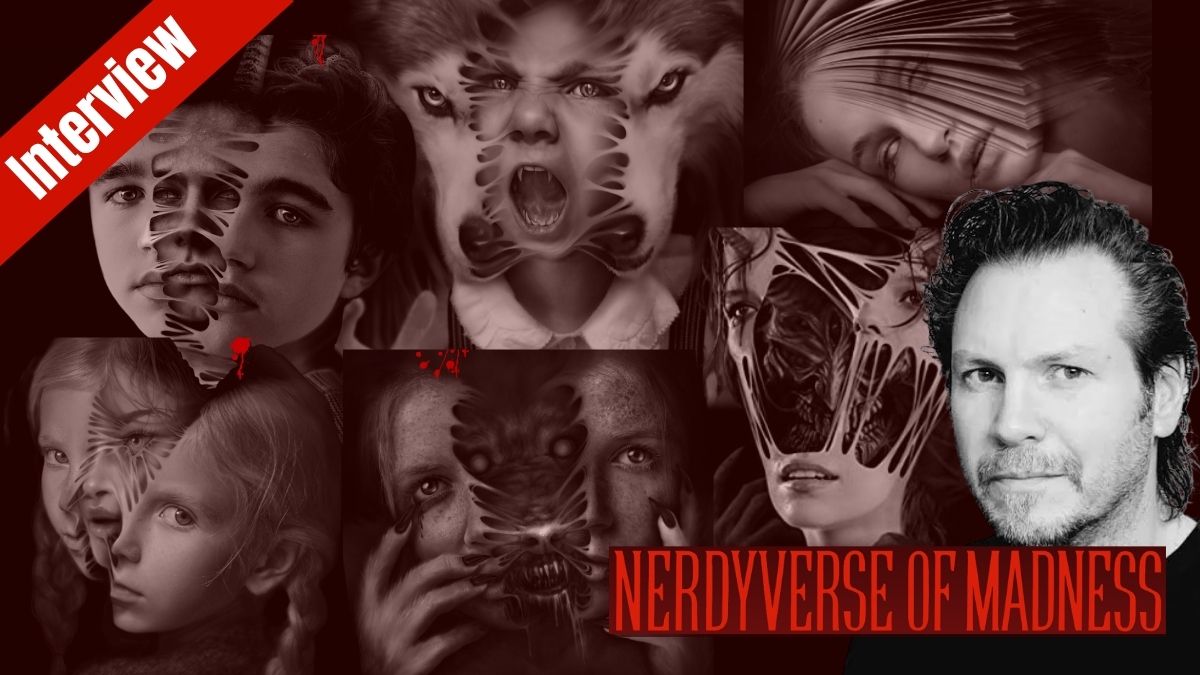
Originally published on January 10th, 2024
Over the summer of 2023, I fell into a hardcore reading phase where I was keeping up a Bookstagram. I don’t keep up with that Instagram page anymore, but I absolutely LOVE that community and have made quite a few friends, both reviewers and authors alike, who have been kind enough to follow me over to my new Instagram page where, not only do I talk about and review books, but TONS of my other interests.
But I digress.
One of the books I kept coming across was a little novella entitled ‘Bad Blood’, which was the first book in a series entitled ‘The Aphotic Series’.
Every review I saw was 4 or 5 stars and, I must say, that the cover was super attractive.
Well, wasn’t just my luck when I saw that the author made a post offering a few free copies in exchange for honest reviews (key word is honest – love it or hate it; rate it), as reviews are debatably the most important thing to an indie author.
I reached out to Tobin to say: “Yes, I would love a copy of your book.” As Bad Blood had currently been in my Amazon cart for a few weeks at that point.
“How many of them would you like?”
“I’ll take all that you’re willing to send me.”
Tobin was kind enough to send me all six books, keen to remind me that the second one was a touch slow and if I could just push through that one, I surely would not be disappointed.
Well, needless to say, though the second book was a touch slower – I didn’t have to push, I finished them all and absolutely LOVED them.
Like, really liked them.
I couldn’t tell you the last time I had finished a multibook series, but I finished this one quicker than I’ve probably read any multibook series.
I was extremely vocal about the books when I was posting on that ‘gram and I am vocal now; so, I was absolutely thrilled that he agreed to be on my podcast when I decided to bring it back.
Tobin has been a great person who I am honored to call a friend. He has been a bigger inspiration than he knows. He gave me advice that made me pick up writing again and, without trying, truly made me think I could actually put out a novella (which I hope to have finished by the end of the year). There’s a few others out there that I need to mention, but Tobin is the only one who’s a writer who gave me sound advice.
Again, I digress.
After the podcast, I asked if he would be willing to do a print interview for this blog – and this is something I want to do with every guest who’s willing and has the time – and he, once again, did not disappoint.
See below my print interview with Tobin Elliott. Consider it a little appetizer for the podcast coming Friday.
***
1. How do you approach character development in your writing, particularly within the complex world of Aphotic?
I’m going to preface my very first answer with this: This is gonna sound weird, but I swear it’s true. In fact, you can likely take that statement for most of my answers.
Okay, how do I approach character development? For the most part, I don’t. Honestly. I have learned through all of my writing that I don’t really create my characters. They’re out there, and they’re waiting for me to get my ass in a chair so they can show up and do what they do in my stories.
For me, I know the bare minimum. When I started writing BAD BLOOD, all I knew was Talia was an unhappy child. All I knew about her mother was that she was a frazzled single parent. When I started BLOOD RELATIONS, I knew Lex didn’t want to come home—and I knew exactly why—and I knew her brother was obnoxious, but no specifics. When I started FLESH AND BLOOD, I knew Monica was dealing with severe PTSD from the events of the previous novel.
As for all the rest of the characters? Including Sam from BLOOD LOSS, who is my favourite? Yeah, I literally knew nothing about them until it came time to put words in their mouths.
Sorry, that’s likely a highly unsatisfactory answer, but it’s honestly what happens.
2. The Aphotic series explores psychological and emotional aspects. I find the character emotions to be extremely realistic in these unrealistic situations. How do you navigate the complexities of human emotions in your characters?
This one’s a lot more personal. To be frank, I’m really trying to go for the most honest, visceral reactions to some incredibly crazy situations. And to do that, I go one of two ways.
The first is to really examine myself, and ask, how would I react to that? It’s as simple as that. I put myself into the head of that character at that moment. I’m experiencing something that’s insanely awful, or something that simply can’t be happening, yet it is. How do I react, assuming dropping to the floor and sucking my thumb is not an option?
The second is to also consider the specific character and, knowing what I know about them—for example, the Toad’s previous horrible abuse, or Mr. Pepper’s self-acknowledged cowardice, both from OUT FOR BLOOD—and then filter their reactions, their emotions through that lens.
To me, I’m just writing what I know, or want to know. But it’s interesting when I get comments back from readers. For example, without spoiling anything, in one of the novels, I have a couple, whose relationship has been falling apart, sit down and try to work things out. Each one getting a lot of frustrations off their chest. And one reader praised me for writing a very mature and realistic scene. Not a scene from a novel, but a realistic scene from life.
Things like that mean a lot to me.
3. To follow that question up: How do you balance creating a believable world while incorporating fantastical elements?
Ah, that’s the trick, isn’t it? And, to be honest, it’s a trick I believe I learned from Stephen King. King is very good at offering up very realistic characters—characters that have traits that you know from real life—and making you care very much for them. You never want to see anything really horrible happen to them.
And then King throws the worst things at them. So, that was my first lesson.
Then along came Jack Ketchum, who only really wrote one novel about anything supernatural. All his stories are very grounded in our world. People do very bad things to other people, but the world they all inhabit is very believable, because it’s our world.
So, the task I set for myself—with varying degrees of success—was to create that gritty, realistic world at the start, the one we all know. Then populate it with characters that are just like you and me: regular people just trying to get through their days, earn some money, drink some coffee, try to do their best, and shake their heads at this crazy world they’re in.
And then, I’ll begin to layer in the weirdness. But if I’ve done my job well, by that point—whether it’s two pages in, or twenty or two hundred—the reader has bought into the world, and the characters and, in relation to my answer to the last question, if they react in a realistic manner to some shit that simply cannot be happening, and yet is, then I hopefully manage to keep them along for the full ride.
Because it’s one hell of a ride.
4. Are there specific themes or messages you hope readers will take away from the Aphotic series?
Yes and no. I was always that irritating kid in the English class that would argue with the teacher. “What do you think that flower represents, Tobin?”
“Why can’t it just be a flower, Mr. MacNamee? Why did the author have to make it mean anything other than it was a flower?”
Yeah, I was that kid. So, for me, if I’ve written something, and you find a message or a theme that resonates with you? Hey, that’s a bonus. But I can say that if you did—and I’m sorry if this is disappointing—but it likely wasn’t put in there intentionally. The biggest job of any writer is to entertain the reader, to take them someplace they never expected to go, and to point out all the wondrous (and yes, the wondrously horrible) things along the way.
So, that’s my “no” part of the answer.
But there’s kind of a “yes” part, too, because, whether I wanted it or not, planned it or not, a little bit of every writer does creep into the manuscript, doesn’t it? I know it did for me.
So, if I have any recurring message, it’s that you don’t have to stick with the family you were born into, not if they’re not loyal to you, not if they don’t appreciate you for who you are. Families can—and should—lift you up when you’re down, but they should also kick that pedestal out from under you if you keep putting yourself too high on it. Family grounds us, supports us, and loves us for who we are—assuming we’re not horrible assholes. And if we are horrible assholes, they should let us know. If that’s not happening, then it’s perfectly permissible to walk away from that family and build your own out of the tribe that you can surround yourself with.
If there’s any recurring message, it’s that each of us comes into this world with almost limitless potential. We can be that next Einstein or Hawking or Degrasse-Tyson. We can be that next Mandela or Ghandi. That next Lennon or McCartney or Robin Williams or George Carlin. Pick your person. You have the potential to outshine them.
But there’s a dark side. You can also become those whose names are now despised or reviled.
And then there’s also the potential to just be like most of us. Average Joes. We come into the world, we exit the world, we leave very few ripples beyond our small circle of friends, family, and co-workers.
All of it comes down to the decisions made for you when you’re young. The environment you grew up in. The influences. And then the decisions you make to each event that life throws at you.
It’s very much like the Dire Straits song, The Bug:
Well it’s a strange old game, you learn it slow
One step forward and it’s back to go
You’re standing on the throttle
You’re standing on the brakes
In the groove ’til you make a mistake
Sometimes you’re the windshield
Sometimes you’re the bug
In my stories, many of my characters make mistakes. But sometimes, they find their groove.
Did I consciously put those themes and messages in my books? Absolutely not.
But did I notice them later on? Absolutely.
5. How has the reception of your work impacted your approach to writing and storytelling, be it hardcore fans like myself to even the 1-star reviews you may receive?
I love the reviews to my work. Both the good and the bad. Whenever I send out review copies, I always make sure to let the reviewer know that I am happy with any review, good or bad, and to not hesitate to rip the book apart if they don’t like it.
And just a side note here before I get to the answer to your question: Here’s my (apparently somewhat controversial) opinion on reviews. Did you take the time to read the book? Then you have the absolute, unalienable right to review it however you wish. If you loved it, great. If you hated it, also great. If you’re somewhere in the middle? Also great. It’s art, and it’s going to hit everyone differently. But your opinion is just as valid as the next person. Don’t rip the author, but feel free to rip the work. It’s in the public, so opinions are expected. And don’t worry about giving less than a 3-star or 4-star review because it “may impact the author’s sales”…whatever. What you didn’t like about that book? It may spur someone else to check it out.
Okay, end of rant on that topic.
On to the actual answer. How has the reception of my work impacted my approach to writing and storytelling? Honest truth? Not at all, with one small caveat.
I say mostly not at all because I just write what I write. I can’t and don’t write to an audience. I only write to please myself. The Aphotic series is a series I would want to read. So, regardless of hardcore fans such as yourself and a few others, or even the ones who stopped reading with the first, very slim novella BAD BLOOD, I write what I write. If the story calls for me to write the demise of an animal, I’m still going to write that. If it calls for me to kill off a character I know the reader likely loves—because I love them too—I’m going to kill them off.
Spoiler alert: animals and loved ones don’t necessarily fare well in my stories. But I always have my reasons, it’s never gratuitous.
Now, I started this answer by saying there was one caveat, and that’s true. The caveat is, I’ve received far better feedback—and better sales—than I’d ever hoped for with this series, so if anything’s changed, it’s the desire to get more stuff out there in front of readers’ eyeballs.
6. In the world of Aphotic, there are unique creatures and entities. How do you go about making them original in your own way, whilst honoring the source material?
Good question. I love my supernatural creatures. I grew up with vampires and werewolves and demons and aliens flitting across my television screen and scaring the crap out of me.
But I’ve never had an interest in presenting them precisely how they’ve always been portrayed because, honestly, every single writer who’s written a book or script for Dracula, or the Wolfman, or the Mummy, or Frankenstein’s Monster has always added a bit of their own flavouring to the mix. So the vampire you read in Stoker’s Dracula is different from Count Orlock in Nosferatu or Bela Lugosi’s cinematic Dracula.
So, when it came time for me to write my own werewolves, I knew I wanted them feral and very pack-loyal. Everything else that I wrote spun out of those two elements.
When I wrote my vampires, I wanted to borrow a bit from the Polish version of the vampires, known as the vjesci but that I wanted some other elements. What if the vampires aged very slowly. They became vampires at the age of seven so…these terrifying creatures look like…children? How fun is that? And I wanted them to be terrifyingly powerful, which allowed me to introduce a couple of other elements.
When it came time to mess with some Lovecraftian horrors, well, I figured I had carte blanche, considering Lovecraft himself encouraged others (mostly notably Robert E. Howard) to take his mythos and run with it.
I’m no Lovecraft or Howard, but I had fun when I came to his horrors. I tried to be very respectful to the origins, but did mess with it a fair amount too.
7. The Aphotic series explores both dark and hopeful themes. How do you strike a balance between these contrasting elements because it does – for the most part – end on a happy note?
I honestly don’t know that I consciously tried to strike a balance. I know that I had three specific characters that I really put through the ringer—and no, I won’t say which three, because, duh, spoilers! —that I wanted to come out the far side scarred, wary, still a little broken, but in a better place.
By now, anyone reading this is likely thinking, so what I’m getting from all of this, Tobin, is that you had no freaking clue what you were doing, and if it turned out well, it’s more in spite of your efforts, not because of them…
They likely wouldn’t be wrong about that.
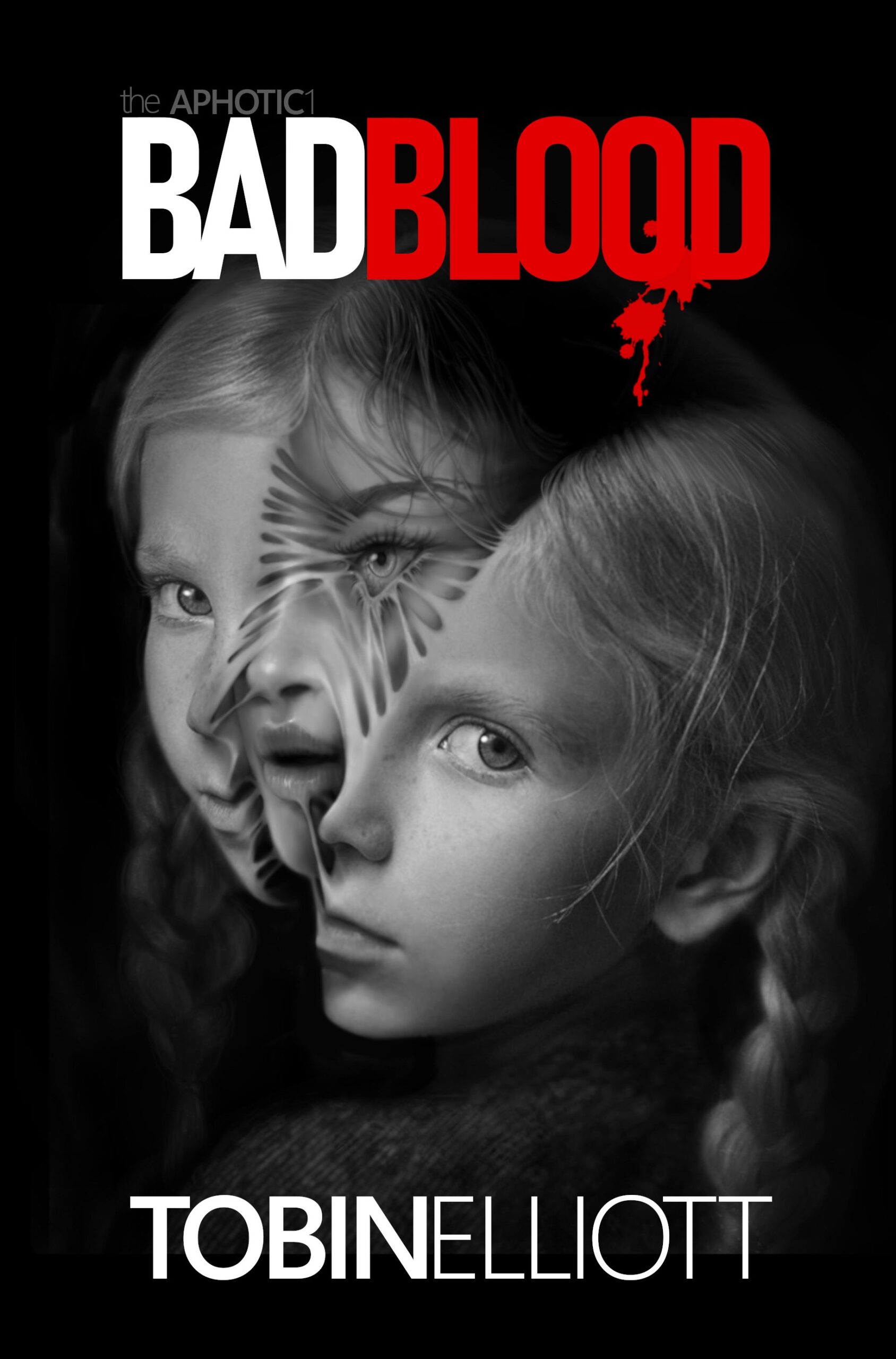
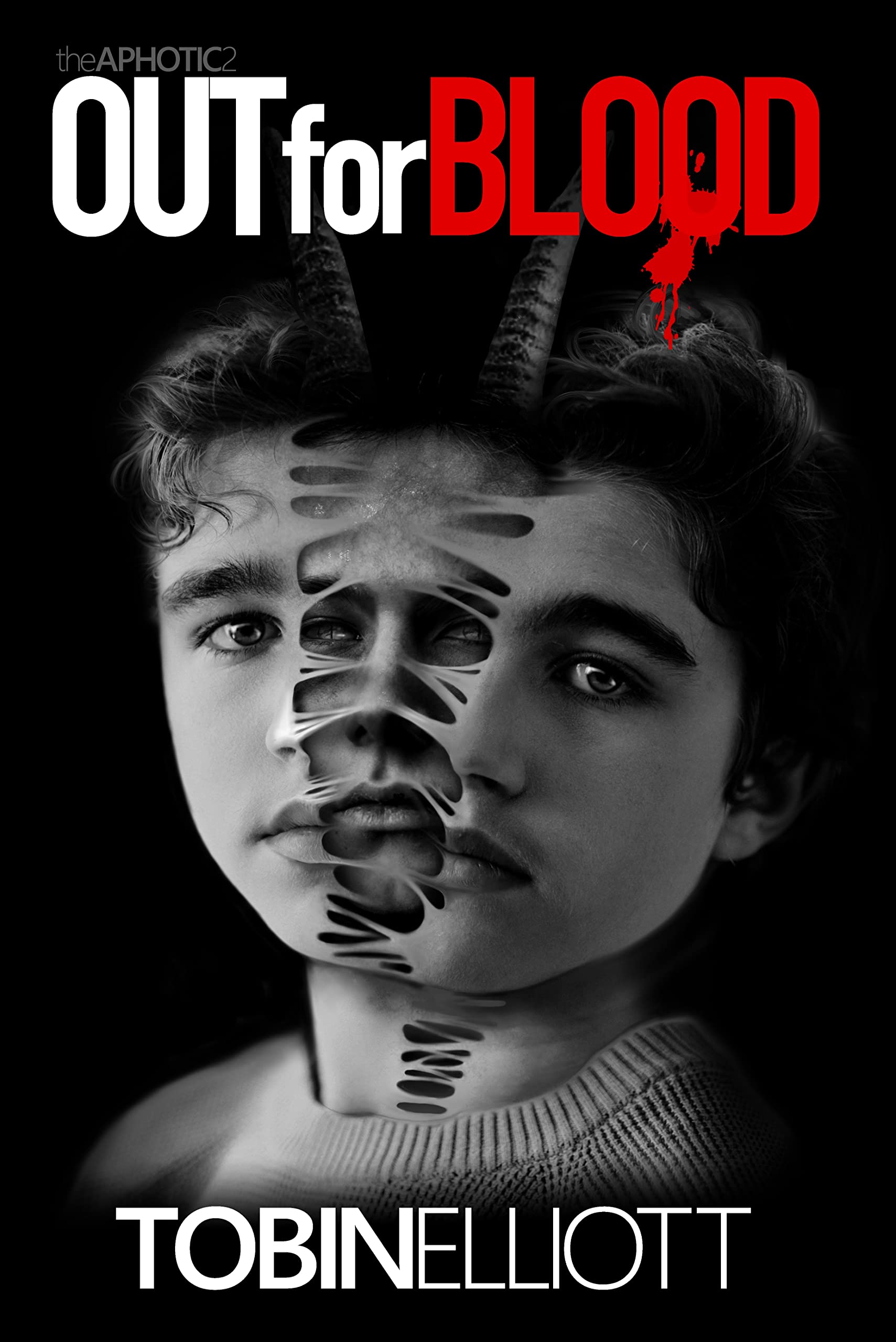
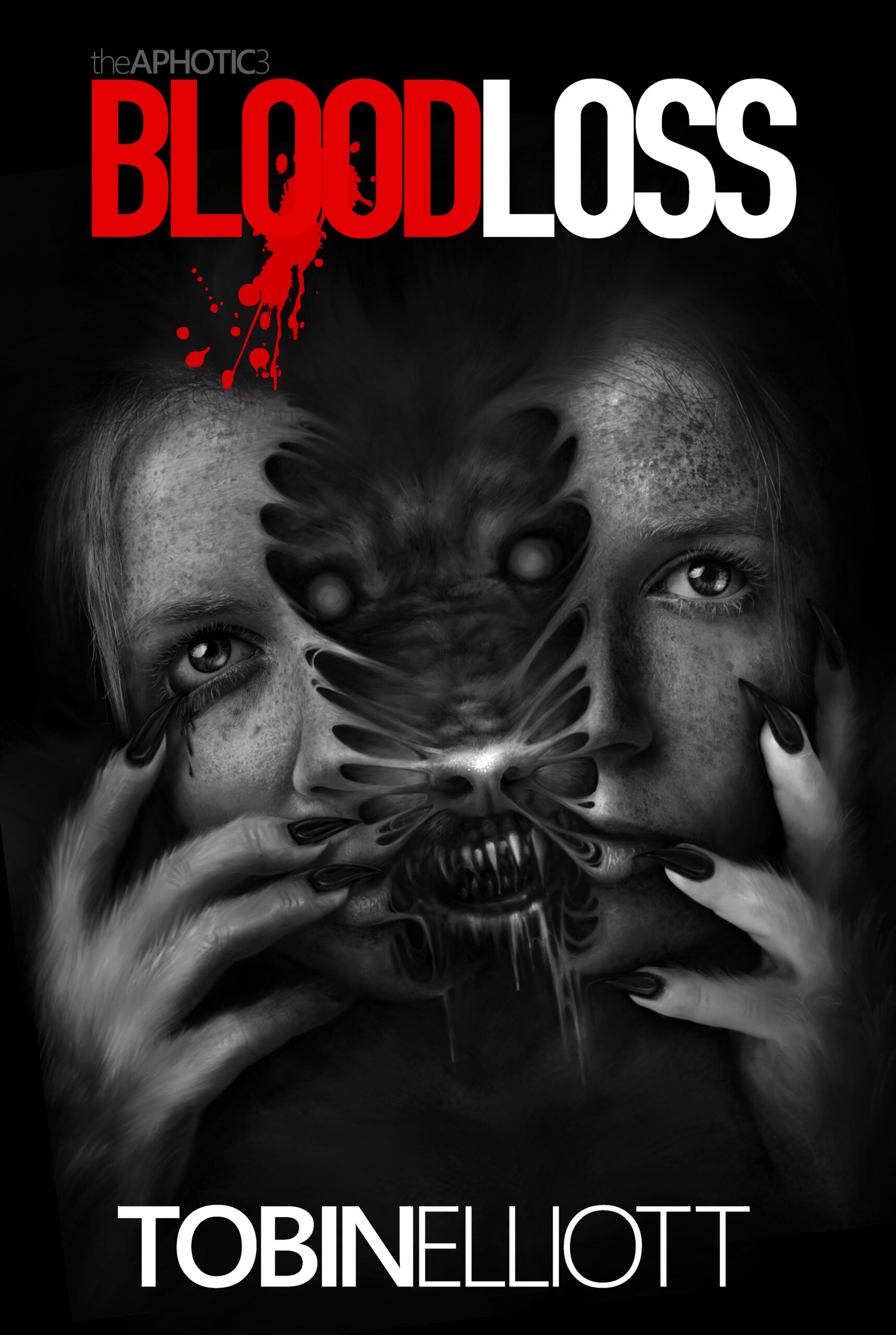
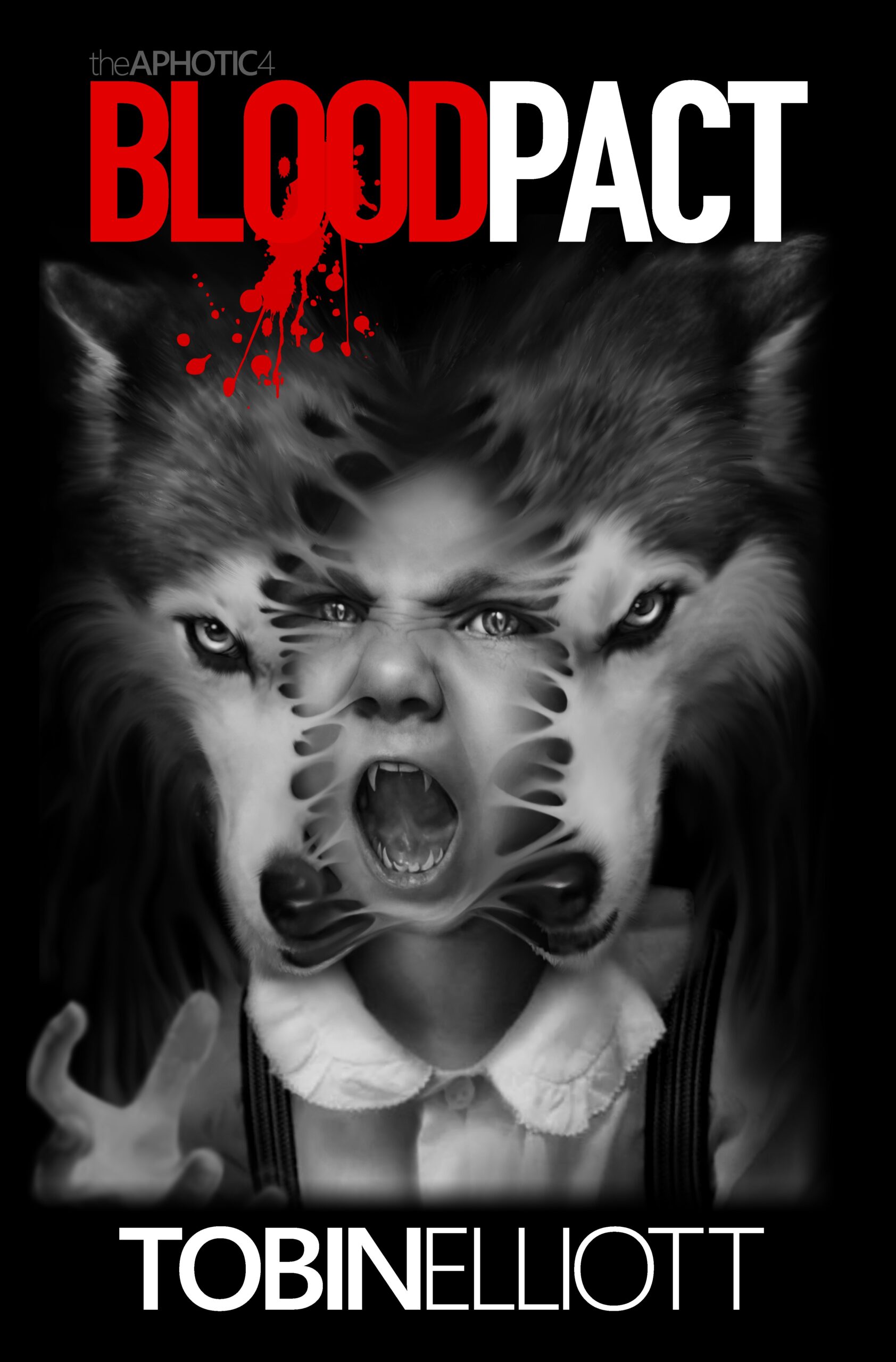
8. The cover art for your books is captivating. How important do you believe cover design is in attracting readers to your work?
Thank you so much for highlighting the covers. They’re honestly one my favourite aspects of the books. I think a good cover design is crucial to attracting readers. Especially when one sees some of the absolutely horrible computer designed, or badly drawn covers that despoil some really good work.
And I know my covers have attracted attention because I’ve been at many signings where people have come over to tell me it was the covers that hooked them.
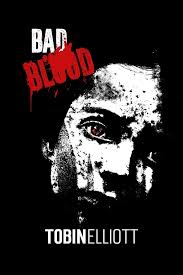
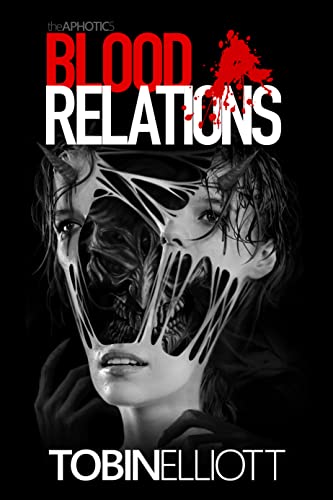
It should also be noted that the cover you see on the first book, BAD BLOOD, was actually the third design.
The first was created by someone who offered their services on social media. I’d seen some of their covers and thought they were good. I gave them a few reference images for what I was thinking, along with a written description. And I stressed, “simple” and “eye-catching”. What I got back was more busy and confusing.
After casting around for other options, I got talking with my daughter-in-law, Camille Codling who said she’d be willing to give it a shot. I gave her all the same info I’d provided to the first cover artist and Camille came up first with a bunch of concepts that we eventually simplified down and made much darker and turned into something I quite liked. Done!
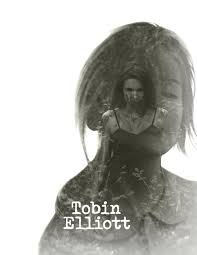
Not done. About a week before I was to hit “publish” I saw a cover to the newest Parkway Drive album Darker Still.
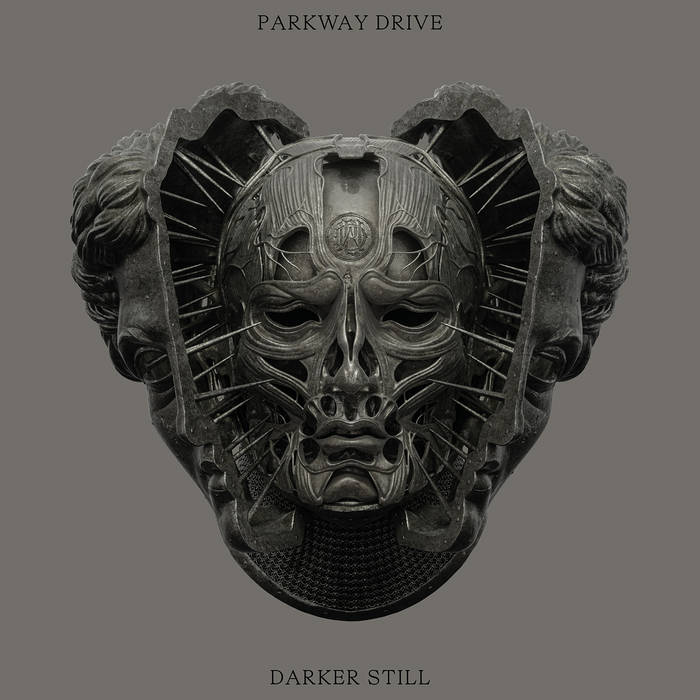
I sent Camille the album cover image saying, “you’re gonna hate me, but I like the concept of the evil splitting the innocent in half and breaking out” and she told me that she did in fact hate me, but that split faces were her thing.
She came back with two ideas, I chose the first one, and that image became the cover, and the concept for the rest.
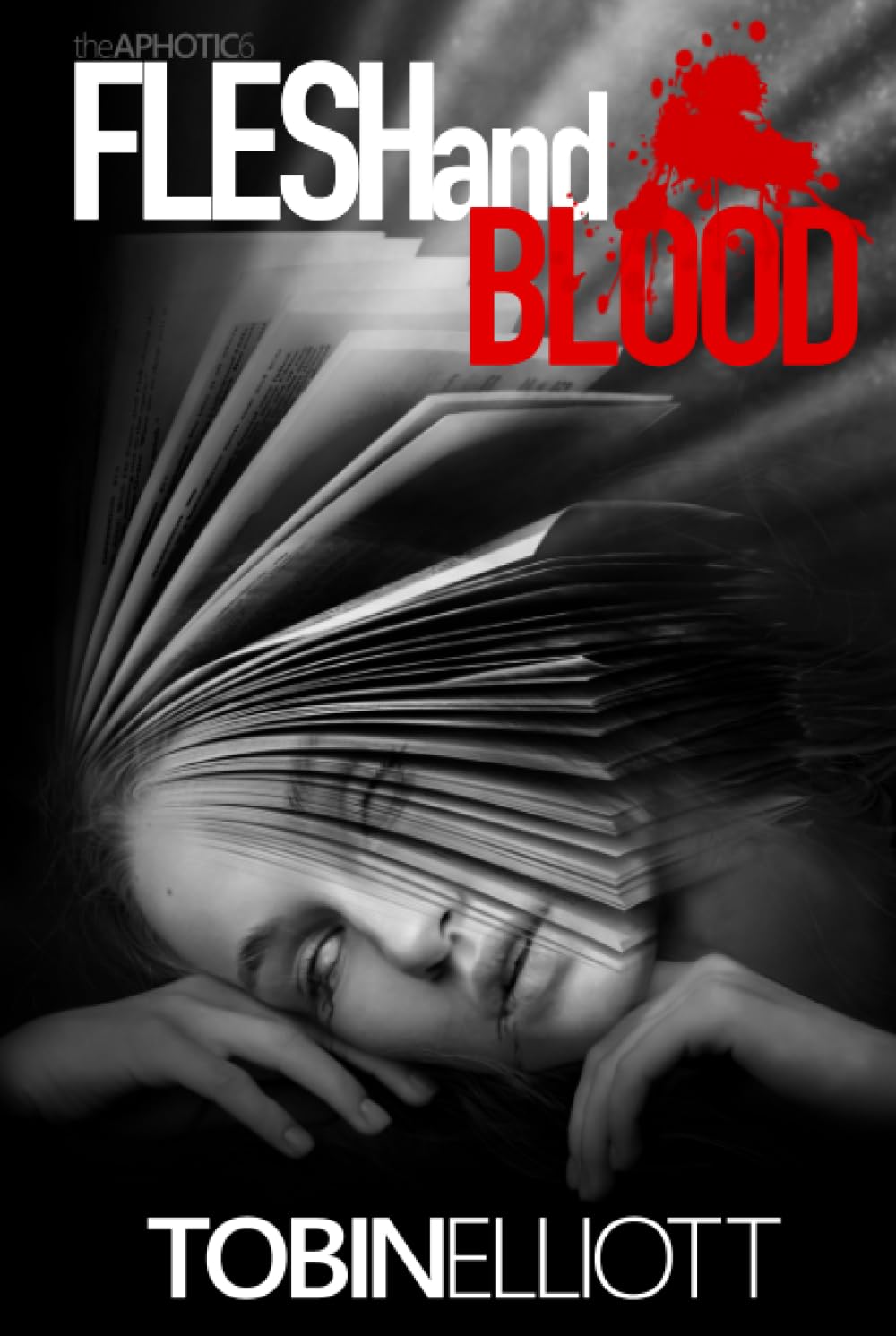
I should also note that, despite me usually giving Camille very specific ideas, she always gave me what I wanted, but then went off script and created a better image. I always chose the off-script one.
9. Collaborating with other creatives, such as cover designers or editors, is essential in the publishing process. Can you share your experiences working with the team behind the scenes?
This is a great question, because I usually get asked about beta readers…I don’t use beta readers. I’m one of those authors that holds the work very close to my chest until the very last moment.
As I said above, Camille was an absolute dream to work with. She’s talented, she’s creative, and I honestly think she knew what I wanted more than I did. As I said, she always gave me exactly what I asked for, but she also gave me an alternative that was always better. She absolutely elevated the look of my novels and, I believe, gave a really good indication of the atmosphere of the writing itself. It’s a rare cover that can do that, and Camille made it happen six times.
But, before the covers, I had to get the novels letter perfect. If I have one extreme prejudice when it comes to self-published or small-press published novels, it’s the editing. Nothing pulls me out of a story more than spelling or grammatical errors. When someone’s muscles are supposed to be straining, they better be “taut” and not “taught” (and yes, I’ve read that in at least three small press books).
But finding an editor is a tricky business. I need someone who isn’t going to try and overpower my voice with their own, but they’re also not going to be afraid to push hard for a change they feel improves the work. Jennifer Dinsmore was that editor for me. And I tested her first.
Jennifer offers a free sample edit, and I took advantage of it. I sent her pages that I knew…I knew…were perfect. I was going to frustrate her by having nothing to edit.
Yeah, that was the plan. Jennifer found a bunch of stuff that needed improving, and it was all stuff I completely agreed with. So, we talked about the books and then she attacked them with all the professionalism she could muster and polished my words until they glowed.
I honestly can’t say enough about either Camille or Jennifer. One made my words shine, the other made imagery that pulled people to those books.
I wouldn’t have been anywhere near as successful without either of these wonderful, talented women.
10. I know I wouldn’t have found you and tons more amazing writers and artists without the internet, so in today’s digital age, social media plays a significant role in connecting with readers. How do you use platforms like Instagram and Facebook to engage with your audience and share your writing journey?
I am honestly not a big fan of social media, and I actually walked away from all of it around 2015 and was quite happy not being on it.
But I also recognize it is a good tool for marketing so, when I knew I was going to start spitting out the Aphotic series in rapid order (one every two months), I knew I had to start building another online presence.
Here’s what I’ve learned about social media. If you put up a stupid picture of a cat or dog, or a hilarious meme, you’re going to get a ton of interaction. Lots of likes, lots of comments, lots of engagement.
However, if you put up an image of your novel, or a quote from a particularly fun review, or a notice that you’re doing a signing somewhere soon, the engagement drops precipitously.
So I really try to keep it light. I joke around a lot, I highlight other talent that truly believe in (though I don’t do it nearly as well as Daniel J. Barnes or Dave Buzan…both very talented authors that you should be following and reading.
I try to put stuff out that people might like. And, occasionally, I’ll toss out one of those “please check out my books” posts, and it does usually have some effect.
I also owe a lot of my success to the bookstagrammers who took on my books and champion the heck out of them. They’re the ones with the built in reader audiences and I think they’re the secret to any small success I have had.
***
You can find more of Tobin, including where to buy his books, here.
Listen to my interview with him here.
Leave a Reply